

What Is a Digital Marketing Strategy?
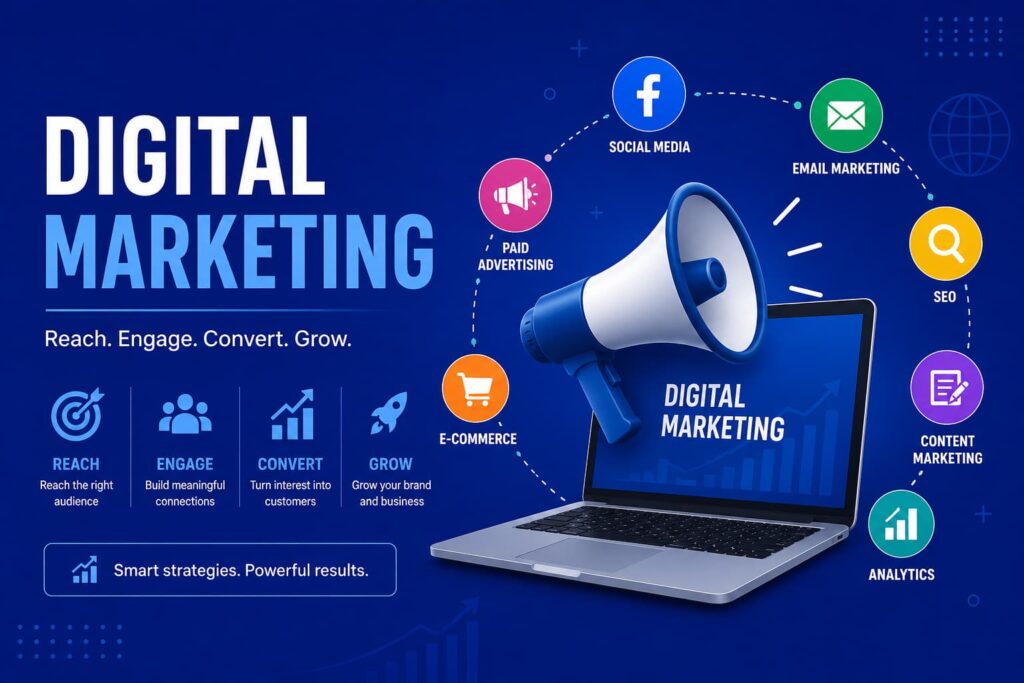
A digital marketing strategy is a carefully planned roadmap that helps businesses promote their products or services through online channels. Instead of randomly posting on social media or running advertisements without direction, a strategy provides a clear plan for reaching the right audience at the right time with the right message. It combines multiple digital marketing techniques, including SEO, content marketing, social media marketing, email marketing, paid advertising, and analytics, into one unified approach. Think of it as the GPS for your business—it tells you where you are, where you want to go, and the best route to get there.
In today’s competitive online world, having a website alone is no longer enough. Consumers research products, compare prices, read reviews, and interact with brands across several digital platforms before making a purchase. Businesses that fail to create a digital marketing strategy often struggle with inconsistent messaging, wasted advertising budgets, and missed opportunities. On the other hand, companies with a well-planned strategy build stronger customer relationships, generate quality leads, and achieve long-term growth. Whether you’re a startup, local business, or multinational corporation, a structured digital marketing strategy serves as the foundation for sustainable online success.
Definition and Core Objectives
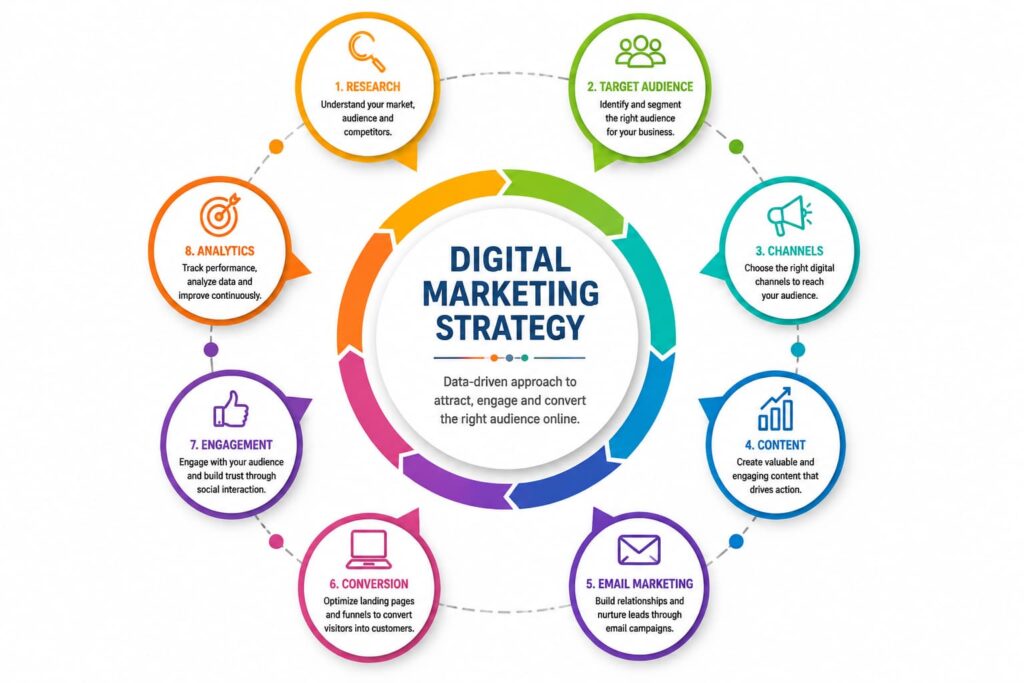
The main purpose of a digital marketing strategy is to align all marketing efforts with business goals. Every campaign, blog post, advertisement, and email should contribute to measurable objectives such as increasing website traffic, generating leads, improving customer engagement, or boosting sales digital marketing strategy . Without clearly defined goals, marketing activities become disconnected, making it difficult to evaluate success or identify areas for improvement.
A successful strategy begins by understanding the target audience. Businesses need to know who their customers are, what problems they face, where they spend their time online, and what type of content influences their purchasing decisions digital marketing stategy . Once this information is gathered, marketers can create personalized campaigns that resonate with potential customers. This customer-focused approach not only improves conversion rates but also strengthens brand loyalty over time.
Why Every Business Needs One
The digital marketplace has become increasingly crowded, making it more challenging than ever for businesses to stand out. Consumers have countless options available with just a few clicks, meaning companies must work harder to capture attention and build trust digital marketing strategy . A digital marketing strategy helps businesses stay organized, maintain consistent branding, and make informed decisions based on data rather than assumptions.
Another major advantage is cost efficiency. Traditional advertising methods such as television, newspapers, and billboards often require significant budgets without guaranteeing measurable results. Digital marketing, however, allows businesses to track every click, impression, conversion, and customer interaction. This data-driven approach enables marketers to optimize campaigns continuously, ensuring better returns on investment while minimizing unnecessary spending
- Benefits of a Strong Digital Marketing Strategy
- Increased Brand Awareness
- Better Lead Generation
- Higher Customer Retention
Benefits of a Strong Digital Marketing Strategy
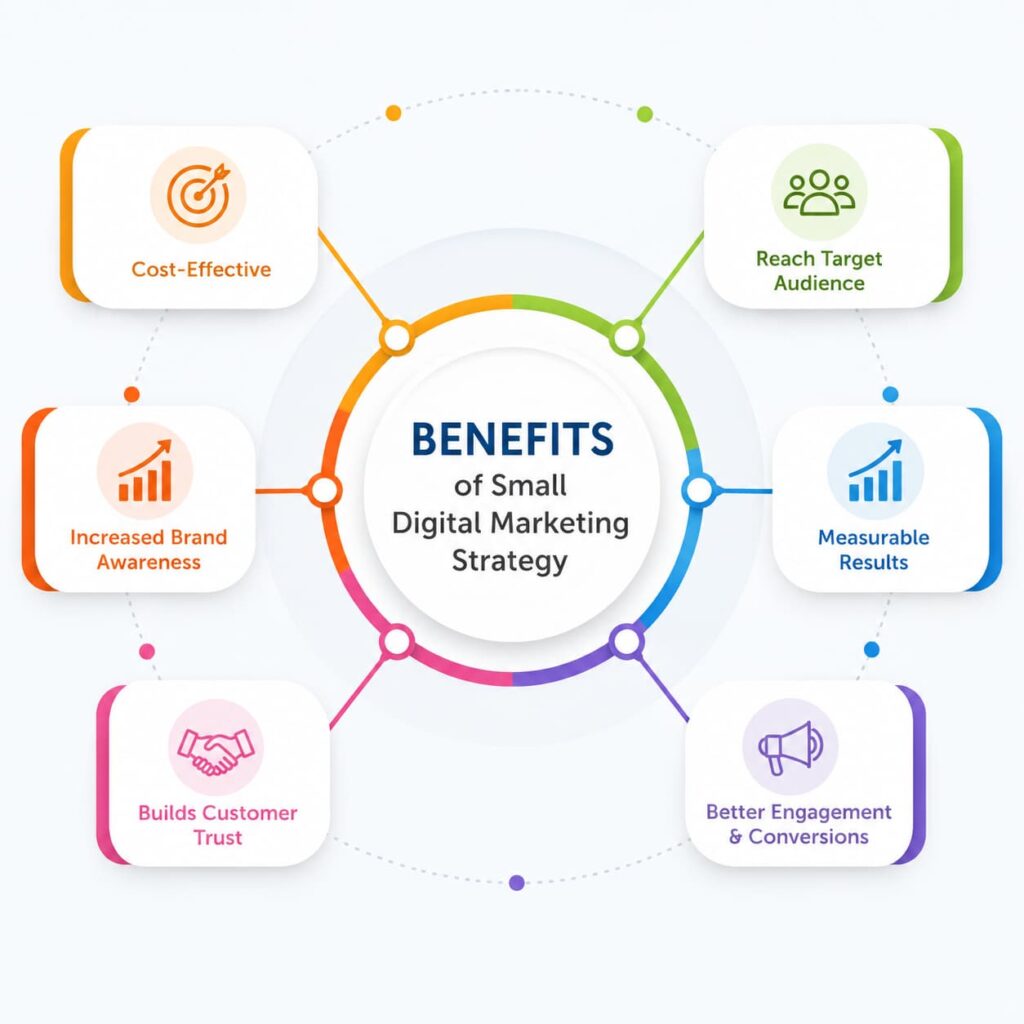
A well-crafted digital marketing strategy is much more than a plan for promoting products or services online. It acts as a roadmap that aligns marketing activities with business goals, ensuring every campaign contributes to measurable growth. Without a strategy, businesses often rely on guesswork, spending time and money on tactics that may not deliver meaningful results. A strategic approach helps companies understand their audience, choose the right marketing channels, create valuable content, and monitor performance effectively. As consumer behavior continues to evolve, businesses that adapt their digital marketing efforts are better positioned to stay ahead of competitors and respond to changing market demands.
One of the greatest strengths of digital marketing is its ability to provide measurable insights. Unlike traditional advertising, where results can be difficult to track, digital campaigns offer detailed analytics that reveal how users interact with websites, advertisements, emails, and social media content. This information helps marketers identify what works, what needs improvement, and where future investments should be made. Businesses can refine their messaging, improve customer experiences, and maximize return on investment by making decisions based on data rather than assumptions. Over time, this creates a cycle of continuous improvement that supports sustainable business growth.
A strong strategy also strengthens collaboration across different marketing activities. Search engine optimization, social media marketing, email campaigns, paid advertising, and content creation should not operate independently. Instead, each channel should complement the others to create a consistent customer journey. For example, a blog optimized for SEO can be shared on social media, promoted through email newsletters, and supported by paid advertisements, increasing its reach and effectiveness digital marketing strategy . This integrated approach ensures customers receive a consistent brand message regardless of where they interact with the business.
Businesses that invest in a digital marketing strategy also gain a competitive advantage by responding more quickly to industry trends and customer preferences. Digital tools make it possible to monitor competitors, analyze market changes, and identify emerging opportunities before they become mainstream. Companies can experiment with new content formats, marketing technologies, and communication methods while measuring their effectiveness in real time. This flexibility enables organizations to innovate continuously, remain relevant, and build stronger relationships with customers in an increasingly competitive digital landscape.
Increased Brand Awareness
Building brand awareness is one of the most valuable outcomes of digital marketing. Before customers make a purchase, they must first recognize and trust a brand. Digital marketing provides multiple opportunities to introduce a business to potential customers through search engines, social media platforms, video content, blogs, email campaigns, podcasts, and online communities. Every interaction increases familiarity, making it more likely that consumers will remember the brand when they are ready to buy.
Search Engine Optimization (SEO) plays a major role in improving brand visibility. When a business consistently appears on the first page of search engine results for relevant keywords, it naturally gains credibility. People often associate higher search rankings with authority and reliability, making them more likely to visit the website and explore its offerings. Publishing informative blog posts, answering common customer questions,digital marketing strategy and creating evergreen content further strengthens this authority while driving consistent organic traffic over time.
Social media marketing adds another layer to brand awareness by encouraging direct engagement with audiences. Platforms such as Facebook, Instagram, LinkedIn, X, Pinterest, and YouTube allow businesses to share educational content, success stories, customer testimonials, and behind-the-scenes updates. Interactive features such as polls, live videos, comments, and stories help brands build authentic relationships rather than simply broadcasting advertisements. These interactions make businesses appear more approachable and trustworthy, increasing customer confidence and loyalty.
Consistency is equally important when building brand awareness. Using the same logo, colors, typography, messaging, and tone of voice across all digital platforms creates a recognizable identity that customers can easily remember. Over time, repeated exposure reinforces brand recognition and encourages consumers to choose familiar businesses over unknown competitors digital marketing strategy . This familiarity becomes especially valuable in competitive industries where customers have many similar options available.
Better Lead Generation
Generating qualified leads is a primary objective for businesses of all sizes,digital marketing strategy . and a comprehensive digital marketing strategy significantly improves this process. Instead of reaching broad audiences with generic messages, digital marketing enables businesses to target specific groups based on demographics, interests, online behavior, geographic location, and purchasing intent. This precision increases the likelihood of attracting people who are genuinely interested in the products or services being offered.
Content marketing serves as one of the most effective lead generation tools. Educational blog articles, downloadable eBooks, webinars, whitepapers, videos, and case studies provide value before asking for a sale. By solving problems and answering customer questions, businesses establish trust and demonstrate expertise. Visitors are often willing to exchange their contact information for valuable resources, allowing companies to build email lists filled with highly relevant prospects digital marketing strategy .
Landing pages and calls-to-action further improve lead generation by guiding visitors toward specific actions. Whether encouraging newsletter subscriptions, free consultations, product demonstrations, or downloadable resources, well-designed landing pages minimize distractions and focus on conversion. Every element—from headlines and images to forms and buttons—should support the user’s decision to take the next step. Continuous testing and optimization help businesses improve conversion rates while reducing customer acquisition costs.
Email marketing nurtures these leads by maintaining regular communication after the initial interaction. Personalized email campaigns can introduce new products, share helpful resources, announce promotions, or provide educational content based on customer interests. Rather than attempting to sell immediately, businesses gradually build relationships and trust, increasing the likelihood that leads will eventually become paying customers. This nurturing process shortens the sales cycle while improving customer satisfaction and long-term engagement.
Higher Customer Retention
Acquiring new customers is important, but retaining existing ones is often more cost-effective and profitable. A successful digitah focuses not only on attracting new audiences but also on maintaining meaningful relationships with current customers. Loyal customers are more likely to make repeat purchases, recommend the brand to others, and provide valuable feedback that supports continuous improvement.
Personalization has become one of the most effective customer retention strategies. Modern digital marketing tools enable businesses to analyze customer preferences, purchase history, browsing behavior, and engagement patterns. Using this information, companies can deliver personalized recommendations, exclusive offers, birthday discounts, and relevant content that makes customers feel valued. These tailored experiences strengthen emotional connections and encourage repeat business.
Customer support also plays a significant role in retention. Social media messaging, live chat, chatbots, email support, and self-service knowledge bases provide customers with quick access to assistance whenever they need it. Fast, helpful responses demonstrate reliability and reinforce trust, particularly when problems arise. Businesses that resolve issues efficiently often strengthen customer loyalty rather than damaging it, turning challenges into opportunities for positive experiences.
Ongoing engagement keeps customers connected long after their initial purchase digital marketing strategy . Newsletters, educational content, loyalty programs, community events, exclusive webinars, and social media interactions remind customers of the brand’s value beyond the products themselves. Businesses that consistently educate, entertain, and support their audiences create lasting relationships that extend well beyond individual transactions. As satisfied customers continue sharing positive experiences with friends, family, and colleagues, they become powerful advocates who contribute to sustainable long-term grow
- Essential Components of a Digital Marketing Strategy
- Market Research
- Target Audience Analysis
- Competitor Research
- Setting SMART Goals
Essential Components of a Digital Marketing Strategy
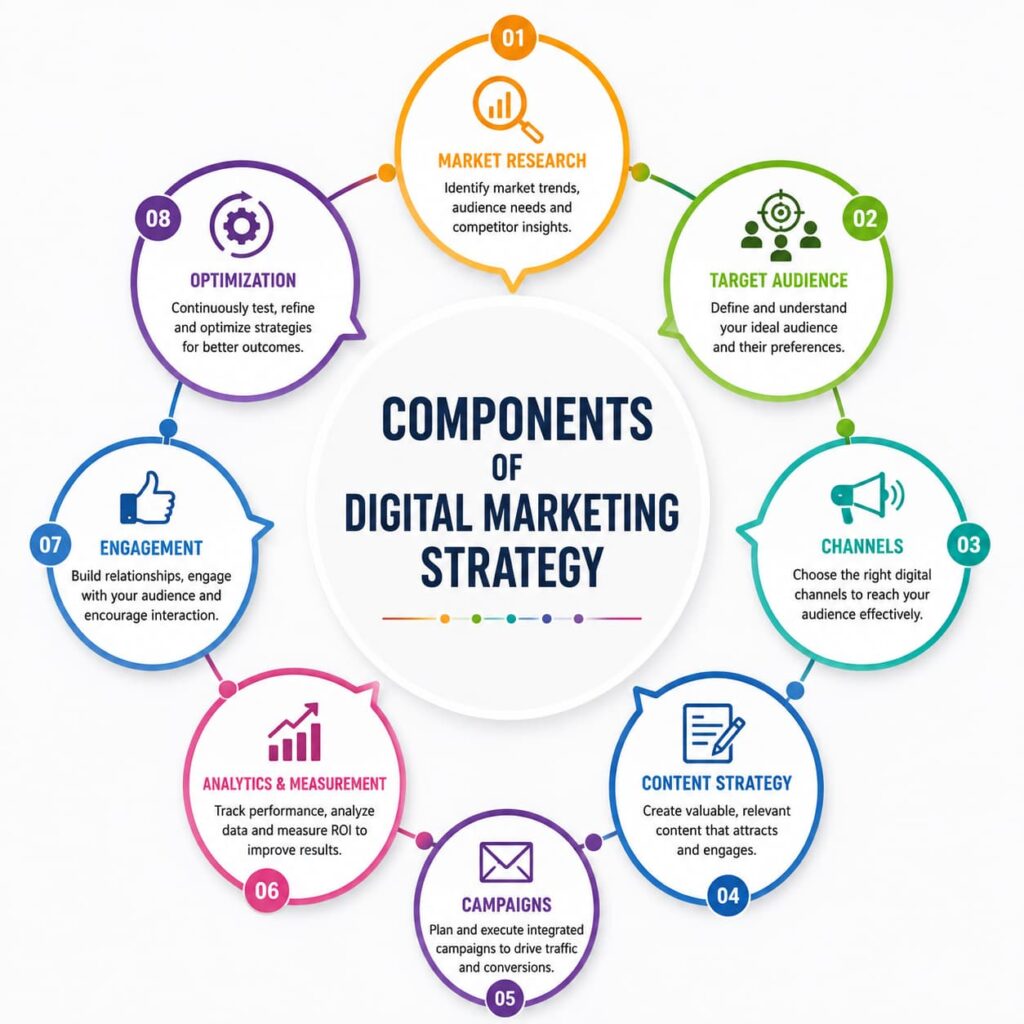
A successful digital marketing strategy is built on a strong foundation rather than isolated marketing activities. Every campaign that delivers measurable results begins with careful planning, thorough research, and a clear understanding of both the business and its audience. Without these essential components, businesses often spend significant amounts of time and money on marketing efforts that fail to produce meaningful outcomes. A strategic approach ensures that every decision—from selecting keywords to creating content and launching advertising campaigns—is guided by data and aligned with business objectives. Instead of reacting to market trends randomly, companies with a structured strategy proactively identify opportunities and create sustainable growth plans.
These components work together like the pieces of a puzzle. Market research reveals industry opportunities, audience analysis explains customer behavior, competitor research highlights strengths and weaknesses, and SMART goals provide measurable direction. When combined, they help businesses create marketing campaigns that are targeted, efficient, and adaptable. Digital marketing is constantly evolving due to technological advancements, changing consumer expectations, and new platform features. Businesses that continuously revisit and improve these foundational elements remain competitive and better prepared to respond to market changes digital marketing strategy . Building a strategy is not a one-time activity but an ongoing process of learning, testing, optimizing, and improving.
Another important aspect of these components is integration. Research findings should influence content creation, advertising, SEO, email marketing, and social media campaigns rather than existing as separate reports. Every marketing decision should reflect customer needs and business priorities. This alignment improves consistency across all channels, creating a seamless customer experience from the first interaction to post-purchase engagement. Companies that invest time in building a strong strategic foundation often achieve better long-term results than those relying solely on short-term promotional tactics.
Market Research
Market research serves as the starting point for every effective digital marketing strategy. Before launching campaigns or investing in advertising, businesses need to understand the industry they operate in, current market trends, customer expectations, and potential opportunities. Research helps identify growing demand, seasonal buying patterns, emerging technologies digital marketing strategy , and shifts in consumer preferences. Instead of making assumptions, marketers use factual information to develop strategies that match real market conditions. This significantly reduces the risk of investing in campaigns that fail to connect with the intended audience.
Effective market research involves collecting information from multiple sources, including customer surveys, industry reports, website analytics, online reviews, and social media discussions Effective market research involves collecting information from multiple sources, including customer surveys, industry reports, website analytics, online reviews, and social media discussions . Search engine trends also reveal what people are actively searching for, helping businesses identify popular topics and frequently asked questions. These insights guide content creation, product development, pricing strategies, and promotional campaigns. Businesses can anticipate customer needs before competitors recognize the same opportunities, giving them a valuable advantage in crowded markets.
. Search engine trends also reveal what people are actively searching for, helping businesses identify popular topics and frequently asked questions. These insights guide content creation, product development, pricing strategies, and promotional campaigns. digital marketing strategy Businesses can anticipate customer needs before competitors recognize the same opportunities, giving them a valuable advantage in crowded markets.
Research also highlights potential challenges that could affect marketing performance. Economic conditions, changing regulations, evolving customer expectations, and technological innovations all influence purchasing decisions. Businesses that monitor these factors regularly can adjust their marketing strategies before problems become significant. For example,Effective market research involves collecting information from multiple sources, including customer surveys, industry reports, website analytics, online reviews, and social media discussions . Search engine trends also reveal what people are actively searching for, helping businesses identify popular topics and frequently asked questions. These insights guide content creation, product development, pricing strategies, and promotional campaigns. Businesses can anticipate customer needs before competitors recognize the same opportunities, giving them a valuable advantage in crowded markets.
if customer interest shifts toward sustainable products, companies can modify their messaging and offerings to meet this demand. digital marketing strategy Continuous research ensures that marketing strategies remain relevant rather than becoming outdated.
Perhaps the greatest benefit of market research is confidence in decision-making. Marketing budgets are often limited, making it essential to invest resources wisely. Research minimizes uncertainty by providing evidence that supports strategic decisions. Businesses can identify the most promising customer segments, evaluate new market opportunities, and prioritize marketing initiatives that offer the greatest potential return on investment. Rather than relying on intuition, successful marketers make informed decisions based on reliable data.
Target Audience Analysis
Understanding the target audience is one of the most important factors in digital marketing success. Even the most creative advertisement or well-designed website will produce limited results if it reaches the wrong people. digital marketing strategy Target audience analysis helps businesses identify who their ideal customers are, what motivates them, what challenges they face, and how they make purchasing decisions. This information allows marketers to create personalized campaigns that speak directly to customer needs instead of delivering generic messages to broad audiences.
Audience analysis typically includes demographic information such as age, gender, income level, education, occupation, and geographic location. However, modern digital marketing goes much deeper by examining psychographics, including interests, lifestyles, values, attitudes, and buying behaviors. Businesses also analyze customer pain points, online habits, preferred communication channels, and purchasing triggers. These insights help create detailed buyer personas that represent different customer segments. Each persona guides the development of relevant content, advertisements, and customer experiences tailored to specific audience groups.
Personalization has become increasingly important because consumers expect brands to understand their preferences. Customers are more likely to engage with businesses that provide relevant recommendations, personalized emails, customized advertisements, and content that addresses their unique challenges. By leveraging customer data responsibly, businesses can improve engagement rates, increase conversion rates, and strengthen customer loyalty. Personalized experiences create stronger emotional connections, making customers feel understood rather than treated as anonymous buyers digital marketing strategy .
Target audience analysis also supports better budget allocation. Instead of advertising to everyone, businesses focus their marketing efforts on the people most likely to become customers. This improves advertising efficiency while reducing unnecessary spending. Campaigns become more targeted, messages become more relevant, and customer interactions become more meaningful. Over time, this precision contributes to stronger brand relationships and higher long-term profitability.
Competitor Research
Competitor research enables businesses to understand their position within the marketplace and identify opportunities for improvement. Studying competitors does not mean copying their strategies; instead, it provides valuable insights into industry standards digital marketing strategy , customer expectations, and areas where differentiation is possible. By analyzing successful competitors, businesses learn which marketing techniques resonate with audiences and which mistakes should be avoided. This knowledge helps organizations refine their own strategies while developing unique value propositions that distinguish them from others.
A comprehensive competitor analysis examines multiple factors, including website design, search engine rankings, content quality, social media engagement, advertising campaigns, pricing strategies, customer reviews, and product offerings. Businesses can evaluate which keywords competitors rank for, what type of content attracts the most engagement, and how frequently they communicate with customers. These insights reveal strengths that can be learned from as well as weaknesses that create opportunities for differentiation.
Customer reviews provide another valuable source of competitive intelligence. Positive reviews highlight features customers appreciate, while negative reviews reveal recurring frustrations and unmet expectations. Businesses that address these gaps can position themselves as better alternatives within the market. Understanding why customers choose competitors and why they leave them—helps organizations improve products, services, and customer experiences without repeating the same mistakes.
digital marketing strategy Competitor research should be viewed as an ongoing process rather than a one-time activity. Digital marketing trends change rapidly, and competitors continuously introduce new campaigns, technologies, and promotional strategies. Regular monitoring allows businesses to respond quickly to industry developments while maintaining their competitive advantage. Rather than reacting after competitors gain market share, proactive research enables companies to innovate, adapt, and stay ahead in an increasingly dynamic digital landscape.
Setting SMART Goals
Every successful digital marketing strategy requires clearly defined objectives that provide direction and measurable outcomes digital marketing strategy . Vague goals such as “increase sales” or “get more traffic” offer little guidance because they lack measurable criteria. The SMART framework solves this problem by ensuring that goals are Specific, Measurable, Achievable, Relevant, and Time-bound. This structured approach transforms broad ambitions into actionable targets that guide marketing activities and simplify performance evaluation.
Specific goals clearly describe what needs to be accomplished, while measurable goals include numerical targets that make progress easy to monitor. Achievable goals remain realistic based on available resources, market conditions, and business capabilities. Relevant goals align with broader organizational objectives, ensuring marketing efforts contribute directly to overall business success. Time-bound goals establish deadlines that create urgency and encourage consistent progress. Together, these five elements create a practical framework for effective strategic planning.
For example, instead of setting a goal to “increase website traffic,” a SMART goal might state: “Increase organic website traffic by 30% within six months through SEO optimization, content marketing, and backlink acquisition.” This objective clearly defines the desired outcome, measurement method, implementation strategy, and completion timeline. Marketing teams can track progress regularly, identify obstacles early, and adjust tactics when necessary.
SMART goals also improve accountability and collaboration within marketing teams. Every team member understands the expected outcomes and their role in achieving them. Progress can be reviewed using analytics dashboards, monthly reports, and performance indicators, allowing continuous optimization throughout the campaign. Businesses that consistently establish SMART goals make better strategic decisions, allocate resources more effectively, and achieve sustainable long-term growth through focused and measurable marketing efforts.