


Imagine opening a beautiful store in the middle of a desert. Your products are outstanding, your prices are fair, and your customer service is excellent but no one knows your store exists. That is exactly what happens when a website is created without keyword research. Even the most informative blog or the best-designed website struggles to attract visitors if it doesn’t target the phrases people actually search for on Google and other search engines. Keyword research acts like a roadmap, connecting your content with your audience by helping you understand what users want, how they search, and which topics deserve your attention.
Modern SEO is no longer about stuffing pages with repeated phrases. Search engines have become incredibly intelligent. They analyze context, user intent, semantic relevance, page quality, and user experience before deciding which pages deserve top rankings. This means successful keyword research requires much more than choosing words with high search volume. It involves understanding your audience, identifying their problems, and creating valuable content that genuinely answers their questions. When you combine the right keywords with helpful, engaging content, you create a powerful foundation for sustainable organic traffic.
This comprehensive guide explains everything you need to know about how to find keywords, select the right search terms, evaluate keyword opportunities, and use the best keyword research tools available today. By the end of this guide, you’ll have a practical strategy you can use for any website or niche.
What Is Keyword Research?
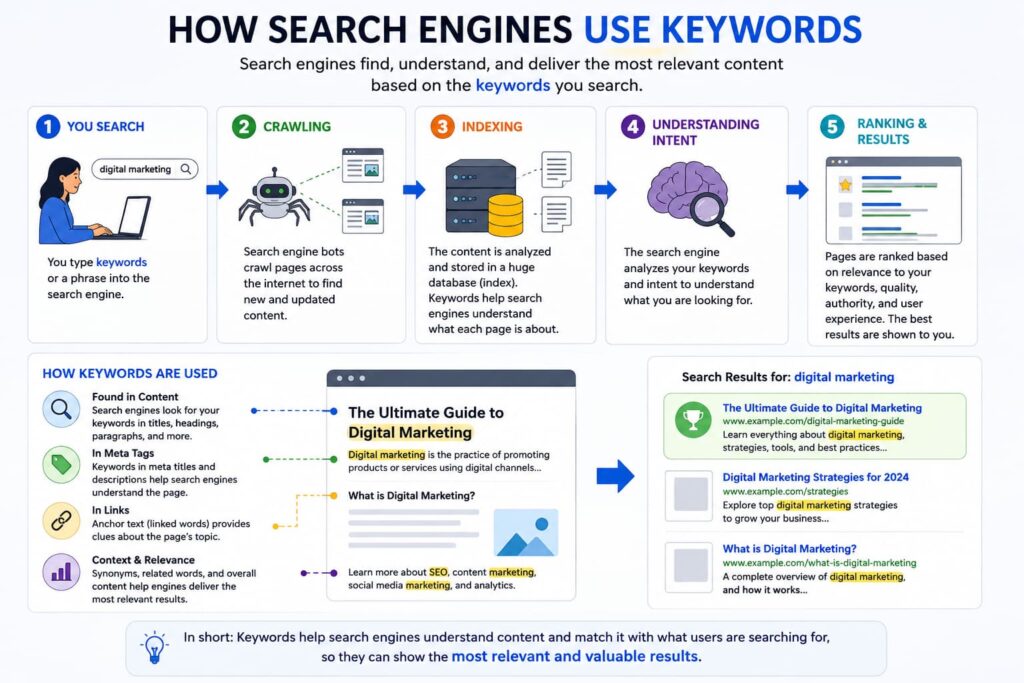
Keyword research is the process of discovering the words and phrases people type into search engines when looking for information, products, or services. These search queries reveal what users want, allowing website owners to create content that matches those needs. Instead of guessing what your audience might search for, keyword research provides real data that helps you make informed decisions. This data often includes search volume, competition level, user intent, seasonal trends, and related search terms. When used correctly, keyword research improves your chances of ranking higher in search results while attracting visitors who are genuinely interested in your content.
Think of keyword research as having a conversation with your audience before you even write your first sentence. Every keyword represents a question, problem, or goal that someone wants to solve. For example, a beginner may search for “how to find keywords,“ while an experienced marketer may search for “advanced keyword research tools.” Although both users are interested in SEO, their needs are completely different. Understanding these differences allows you to produce content that satisfies each type of searcher.
Successful websites don’t rely on one or two keywords. Instead, they build entire content strategies around clusters of related keywords. A single article can rank for dozens or even hundreds of search terms if it comprehensively covers a topic. That’s why modern SEO focuses on topical authority rather than isolated keywords.
Why Keywords Matter in SEO
Search engines aim to provide users with the most relevant answers possible. Keywords help Google understand what your content is about, but relevance extends far beyond simply matching words. Google’s algorithms evaluate how well your content satisfies search intent, whether it answers common questions, and how users interact with your page after clicking. High-quality keyword targeting improves these signals because users are more likely to find exactly what they need.
Using the right keywords also improves every aspect of digital marketing. Blog posts become easier to discover, product pages attract buyers with stronger purchase intent, and educational content builds trust with potential customers. Businesses that consistently publish keyword-focused content often experience steady growth in organic traffic without relying entirely on paid advertising.
How Search Engines Use Keywords
Search engines use sophisticated algorithms powered by artificial intelligence to analyze web pages. Instead of counting keyword repetitions, they evaluate context, synonyms, related concepts, and overall topical coverage. For example, an article about keyword research should naturally mention concepts like search intent, keyword difficulty, search volume, long-tail keywords, competitor analysis, and SEO strategy. These related terms help search engines understand that your content comprehensively covers the topic.
Google also examines user behavior. If visitors quickly leave your page because it doesn’t answer their question, rankings may decline over time. On the other hand, content that keeps readers engaged, encourages further exploration, and satisfies search intent often earns stronger rankings. This shift means keyword optimization should always prioritize readers first and search engines second.
Why Keyword Research Is Important
Many beginners believe SEO starts after publishing content, but the reality is exactly the opposite. SEO begins before you write your first headline. Keyword research determines whether your article has the potential to attract visitors or disappear into the vast sea of online content. Without research, you’re essentially creating content based on assumptions rather than evidence. Some topics may have almost no search demand, while others are highly competitive and nearly impossible for new websites to rank for. Keyword research helps you avoid both extremes by identifying realistic opportunities that align with your website’s goals.
Businesses that invest time in keyword research also gain valuable insights into customer behavior. Search queries reveal pain points, purchasing intentions, frequently asked questions, and emerging trends. These insights influence not only SEO but also product development, advertising campaigns, email marketing, and customer support. Understanding what your audience searches for helps you communicate using their language rather than industry jargon.
Another major advantage is improved content planning. Instead of randomly publishing articles, you can organize content around related keyword clusters that strengthen topical authority. Over time, search engines recognize your website as a reliable resource in your niche, leading to better rankings across multiple keywords instead of isolated search terms.
Benefits for SEO
Effective keyword research provides several long-term SEO benefits:
| Benefit | Impact |
|---|---|
| Better rankings | Targets keywords users actually search |
| Higher organic traffic | Attracts relevant visitors |
| Increased topical authority | Builds expertise around related subjects |
| Better content planning | Creates a structured publishing strategy |
| Higher conversion rates | Reaches users with stronger purchase intent |
Unlike paid advertising, organic rankings continue generating traffic long after content is published. A well-optimized article can bring visitors for years with only occasional updates, making keyword research one of the highest-return investments in digital marketing.
Continue writing to receive Part 2, where we’ll cover:
- Understanding Search Intent
- Informational, Navigational, Commercial & Transactional Keywords
- How to Find the Right Keywords
- Brainstorming Seed Keywords
- Competitor Keyword Analysis
- Best Free and Paid Keyword Research Tools
- Real-world examples and expert tips
Continue writing please
Understanding Search Intent
One of the biggest changes in modern SEO is the growing importance of search intent. Simply targeting a keyword is no longer enough. You must understand why someone is searching for that keyword. Search intent represents the purpose behind every search query. Is the user trying to learn something? Compare products? Find a specific website? Or are they ready to make a purchase? Google has become exceptionally good at identifying user intent and ranking pages that best satisfy it. If your content matches the intent behind a search, your chances of ranking improve significantly.
Think of search intent as understanding a customer’s mindset before answering their question. For example, someone searching “what is keyword research” is probably a beginner looking for educational content. On the other hand, someone searching “best keyword research tools pricing” is much closer to making a buying decision. If both users land on the same page, one of them is unlikely to find exactly what they need. That’s why successful SEO strategies focus on creating content tailored to different stages of the customer journey.
Google also measures user satisfaction after they click on your page. If visitors quickly return to the search results because your content doesn’t answer their question, that sends negative signals. Pages that successfully satisfy search intent often enjoy better rankings, longer session durations, and higher engagement rates. Matching intent is no longer optional—it’s a core component of effective SEO.
Informational Intent
Informational searches occur when users want to learn something. These queries often begin with words like how, what, why, when, or guide. Examples include:
- How to find keywords
- What is keyword research?
- SEO tips for beginners
- How Google ranks websites
Educational blog posts, tutorials, detailed guides, and explanatory articles perform best for informational searches. Since these users are in the research phase, your goal should be to educate rather than sell. Providing valuable information builds trust and increases the likelihood that readers will return when they’re ready to make a purchasing decision.
Navigational Intent
Navigational intent is straightforward. Users already know where they want to go and use a search engine to find a specific website or page. Searches such as Google Search Console, Ahrefs login, or Semrush pricing fall into this category. Ranking for branded navigational searches usually depends on owning that brand or having highly relevant content associated with it.
Commercial Intent
Commercial investigation occurs when users are comparing options before making a purchase. They might search for:
- Best keyword research tools
- Ahrefs vs Semrush
- Best SEO software for beginners
- Top free keyword research tools
These users appreciate detailed comparisons, feature breakdowns, pricing tables, expert reviews, and real-world examples. Content that helps readers evaluate different solutions often performs well for commercial keywords.
Transactional Intent
Transactional searches indicate that users are ready to take action. They may search for:
- Buy SEO software
- Keyword research tool subscription
- SEO course online
Product pages, pricing pages, and service landing pages are ideal for transactional keywords. These pages should clearly explain benefits, pricing, testimonials, and calls to action that make it easy for users to complete their desired action.
How to Find the Right Keywords
Finding the right keywords is both an art and a science. It involves understanding your audience, studying competitors, analyzing keyword metrics, and identifying opportunities that align with your website’s goals. Rather than chasing only high-volume keywords, focus on finding terms that balance relevance, competition, and user intent. This approach helps you attract qualified traffic that is more likely to engage with your content or convert into customers.
A smart keyword research process begins with brainstorming broad ideas before gradually narrowing them into specific opportunities. Imagine building a tree. Your main topic is the trunk, broader categories are the branches, and long-tail keywords are the leaves. This structured approach allows you to build topical authority while covering multiple related search queries.
Brainstorm Seed Keywords
Seed keywords are broad terms that describe your niche. They serve as the starting point for discovering hundreds or even thousands of related keyword ideas.
For an SEO website, seed keywords might include:
- SEO
- Keyword research
- Search engine optimization
- Content marketing
- Link building
- Technical SEO
- On-page SEO
Once you identify these broad terms, keyword research tools can generate related keywords, questions, long-tail phrases, and trending searches. These suggestions often reveal opportunities you may never have considered.
Don’t rely solely on your own ideas. Ask customers what words they use, browse industry forums, explore Reddit discussions, review customer support questions, and examine Google’s “People Also Ask” section. These sources provide valuable insight into how real users think and search.
Analyze Competitors
Your competitors have already done much of the hard work. Instead of starting from scratch, analyze websites that consistently rank for your target keywords.
Pay attention to:
- Which keywords they rank for
- Their most successful blog posts
- Their page titles and headings
- Frequently covered topics
- Content gaps you can fill
Competitor analysis isn’t about copying content. Instead, use it to discover opportunities where you can create better, more comprehensive, and more helpful resources.
For example, if a competitor publishes a 1,200-word article explaining keyword research, you might create a 3,000-word guide with updated statistics, practical examples, visual explanations, FAQs, and actionable tips. Search engines reward content that provides greater value to users.
Use Keyword Research Tools
Keyword research tools simplify the process by providing valuable metrics such as search volume, keyword difficulty, trends, CPC (Cost Per Click), and related keyword suggestions. While no tool is perfect, combining insights from multiple sources gives a clearer picture of which keywords deserve your attention.
Free Keyword Research Tools
Free tools are excellent for beginners and small businesses with limited budgets. Some of the most popular options include:
| Tool | Best For | Cost |
|---|---|---|
| Google Keyword Planner | Search volume estimates | Free |
| Google Trends | Trending topics | Free |
| Google Search Console | Existing keyword performance | Free |
| Keyword Surfer | Browser keyword suggestions | Free |
| AnswerThePublic | Question-based keywords | Free (limited) |
These tools provide enough data for many SEO projects, especially when you’re just starting.
Paid Keyword Research Tools
Professional marketers often invest in premium tools because they provide deeper insights and competitive analysis.
| Tool | Strength | Ideal For |
|---|---|---|
| Semrush | Complete SEO suite | Agencies & Businesses |
| Ahrefs | Backlink & keyword analysis | Advanced SEO |
| Moz Pro | Keyword tracking | Small businesses |
| SE Ranking | Affordable all-in-one platform | Freelancers |
| Mangools KWFinder | Beginner-friendly interface | Bloggers |
Paid platforms typically include features like competitor keyword analysis, SERP history, keyword clustering, backlink research, rank tracking, and AI-powered content recommendations. These capabilities save time and uncover opportunities that free tools may miss.
Many SEO professionals combine several tools because each platform has unique strengths. Cross-checking keyword data helps you make more informed decisions and develop a stronger content strategy.
Continue writing for Part 3, where we’ll cover:
- Choosing the Best Keywords
- Search Volume vs Keyword Difficulty
- Long-Tail Keywords
- Keyword Clustering
- Common Keyword Research Mistakes
- Conclusion
- 5 Unique FAQs
- Final SEO recommendations and the custom footer.
Continue writing please
Created with AIPRM Prompt “Human Written |100% Unique |SEO Optimised Article”
Choosing the Best Keywords
Finding hundreds of keyword ideas is only the first step. The real challenge is selecting the keywords that will deliver meaningful traffic and business results. Many beginners make the mistake of targeting only the highest search volume keywords, believing they will generate the most visitors. In reality, these broad keywords are often dominated by authoritative websites with years of SEO history and thousands of backlinks. Instead of competing directly with industry giants, focus on keywords that offer a balance between search volume, competition, and relevance to your audience. A carefully chosen keyword with moderate search volume can generate far more valuable traffic than a highly competitive term that never reaches the first page of Google.
Another important consideration is business relevance. Every keyword should support your website’s goals. For example, if you sell SEO software, attracting visitors searching for “what is SEO” can build awareness, but users searching for “best keyword research tools” or “SEO software comparison” are much closer to becoming customers. Building a content strategy around different stages of the customer journey allows you to educate beginners while also targeting high-converting commercial keywords. This balanced approach creates sustainable organic growth over time.
Keyword Difficulty
Keyword Difficulty (KD) estimates how challenging it is to rank on the first page of search engine results for a particular keyword. Most SEO tools calculate this score using factors such as backlink profiles, domain authority, content quality, and competition among existing ranking pages. Although every tool uses a slightly different formula, keyword difficulty remains one of the most valuable metrics when planning an SEO strategy.
For newer websites, low-competition keywords provide the fastest path to organic traffic. Ranking for a keyword with moderate search volume and low difficulty is often much easier than competing for an extremely popular keyword dominated by well-established brands. As your website gains authority through consistent publishing and quality backlinks, you can gradually target more competitive search terms.
A practical strategy is to divide keywords into three categories:
| Keyword Difficulty | Recommendation |
|---|---|
| Low (0–30) | Excellent for new websites |
| Medium (31–60) | Suitable for growing websites |
| High (61+) | Best for established, authoritative websites |
Remember that keyword difficulty should never be viewed in isolation. Always compare it with search intent, search volume, and the quality of existing search results before making your final decision.
Search Volume
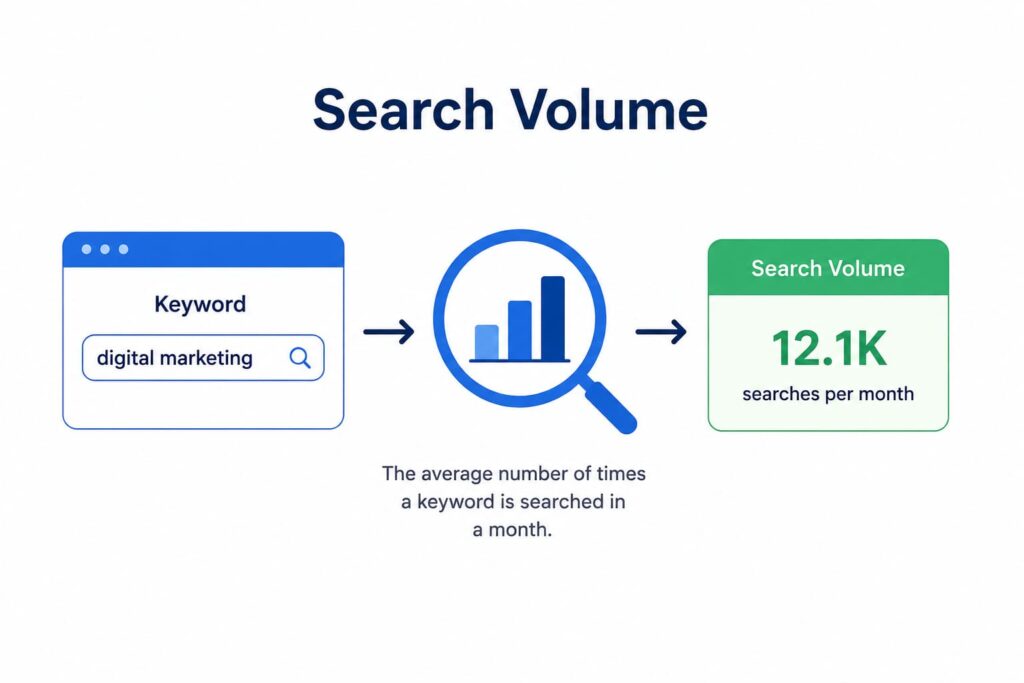
Search volume represents the estimated number of times a keyword is searched during a specific period, usually each month. While higher search volume often appears attractive, it doesn’t always translate into better results. Broad keywords frequently attract visitors with different intentions, making conversions more difficult.
For example:
| Keyword | Monthly Search Volume | Competition | Intent |
|---|---|---|---|
| SEO | Very High | Very High | Broad |
| Keyword Research | High | High | Informational |
| How to Find Keywords for a New Website | Medium | Medium | Informational |
| Best Keyword Research Tools for Bloggers | Lower | Low | Commercial |
Although the final keyword receives fewer searches, it targets users with a very specific need. Such visitors are more engaged and often spend more time reading your content, increasing the chances of conversions.
Seasonality also affects search volume. Certain topics experience predictable increases during particular times of the year. Monitoring trends allows you to publish content before demand reaches its peak, giving search engines enough time to index and rank your pages.
Long-Tail Keywords
Long-tail keywords are longer, more specific search phrases that usually contain three or more words. While they generally have lower search volume than broad keywords, they often produce significantly higher conversion rates because they reflect very specific user intent.
Consider these examples:
- SEO
- Keyword research
- Keyword research for beginners
- How to find keywords for a small business website
- Best free keyword research tools for bloggers
Each step becomes more specific, making it easier to understand exactly what the user wants.
Long-tail keywords offer several important advantages:
- Lower competition
- Higher conversion rates
- Better alignment with user intent
- Easier rankings for newer websites
- Opportunities to build topical authority
Instead of creating dozens of short articles targeting individual keywords, modern SEO encourages comprehensive content that naturally incorporates multiple related long-tail keywords throughout the page.
Keyword Clustering
Keyword clustering involves grouping similar keywords that share the same search intent into a single comprehensive article. Rather than writing separate pages for every slight keyword variation, you create one authoritative resource capable of ranking for multiple related queries.
For example, this article targets several closely related keywords:
- Keyword research
- How to find keywords
- Keyword research tools
- SEO keyword research
- Find SEO keywords
- Best keyword tools
Because all these keywords relate to the same central topic, they naturally fit within one in-depth guide.
Keyword clustering offers several SEO benefits:
- Reduces keyword cannibalization
- Improves topical authority
- Creates stronger internal linking opportunities
- Enhances user experience
- Increases the number of ranking keywords per page
This strategy aligns perfectly with Google’s emphasis on topic relevance rather than exact keyword repetition.
Common Keyword Research Mistakes
Even experienced marketers occasionally make keyword research mistakes that limit their SEO performance. Understanding these pitfalls can save significant time and effort.
One common mistake is focusing exclusively on search volume while ignoring search intent. Ranking for a popular keyword is meaningless if visitors leave immediately because your content doesn’t match their expectations. Always prioritize relevance over raw traffic numbers.
Another mistake is targeting highly competitive keywords too early. New websites often struggle to compete against established brands with years of authority. Building momentum through lower-competition keywords creates a stronger foundation for future growth.
Keyword stuffing is another outdated practice that should be avoided. Repeating the same keyword unnaturally throughout a page reduces readability and may negatively impact rankings. Instead, write naturally while incorporating synonyms, related phrases, and semantic keywords.
Ignoring competitor analysis is equally problematic. Competitors often reveal valuable keyword opportunities and content gaps that you can improve upon rather than duplicate.
Finally, many website owners neglect to update existing content. Search trends evolve constantly, and refreshing articles with current information, improved examples, and newly discovered keywords helps maintain strong rankings over time.
Conclusion
Keyword research remains the cornerstone of every successful SEO strategy. It bridges the gap between what your audience is searching for and the content you create. By understanding search intent, evaluating keyword difficulty, analyzing search volume, and focusing on long-tail opportunities, you can build a sustainable content strategy that attracts qualified visitors and improves search visibility.
The most effective keyword strategy isn’t about finding a single perfect keyword. It’s about creating comprehensive, high-quality content around related keyword clusters while consistently delivering value to readers. Search engines reward websites that demonstrate expertise, authority, and trustworthiness through helpful, well-organized information.
SEO is an ongoing process rather than a one-time task. Regularly reviewing keyword performance, monitoring industry trends, updating existing content, and expanding topical coverage will help your website remain competitive as search algorithms continue to evolve. With patience, consistency, and a data-driven approach, keyword research becomes one of the most powerful tools for driving long-term organic growth.
Frequently Asked Questions (FAQs)
1. What is keyword research in SEO?
Keyword research is the process of discovering the words and phrases people use in search engines so you can create content that matches their needs and improves your chances of ranking in search results.
2. Which is the best keyword research tool?
There isn’t a single best tool for everyone. Google Keyword Planner is excellent for beginners, while Semrush, Ahrefs, and SE Ranking offer advanced features for professional SEO campaigns.
3. What are long-tail keywords?
Long-tail keywords are highly specific search phrases containing three or more words. They usually have lower competition and higher conversion rates because they closely match user intent.
4. How often should I perform keyword research?
Keyword research should be an ongoing activity. Review your keyword strategy every few months, monitor trends regularly, and update existing content to maintain strong search rankings.
5. Can I rank without keyword research?
While it’s possible for some pages to rank naturally, keyword research greatly improves your chances of attracting relevant traffic. It ensures your content aligns with what users are actively searching for, making your SEO efforts far more effective.